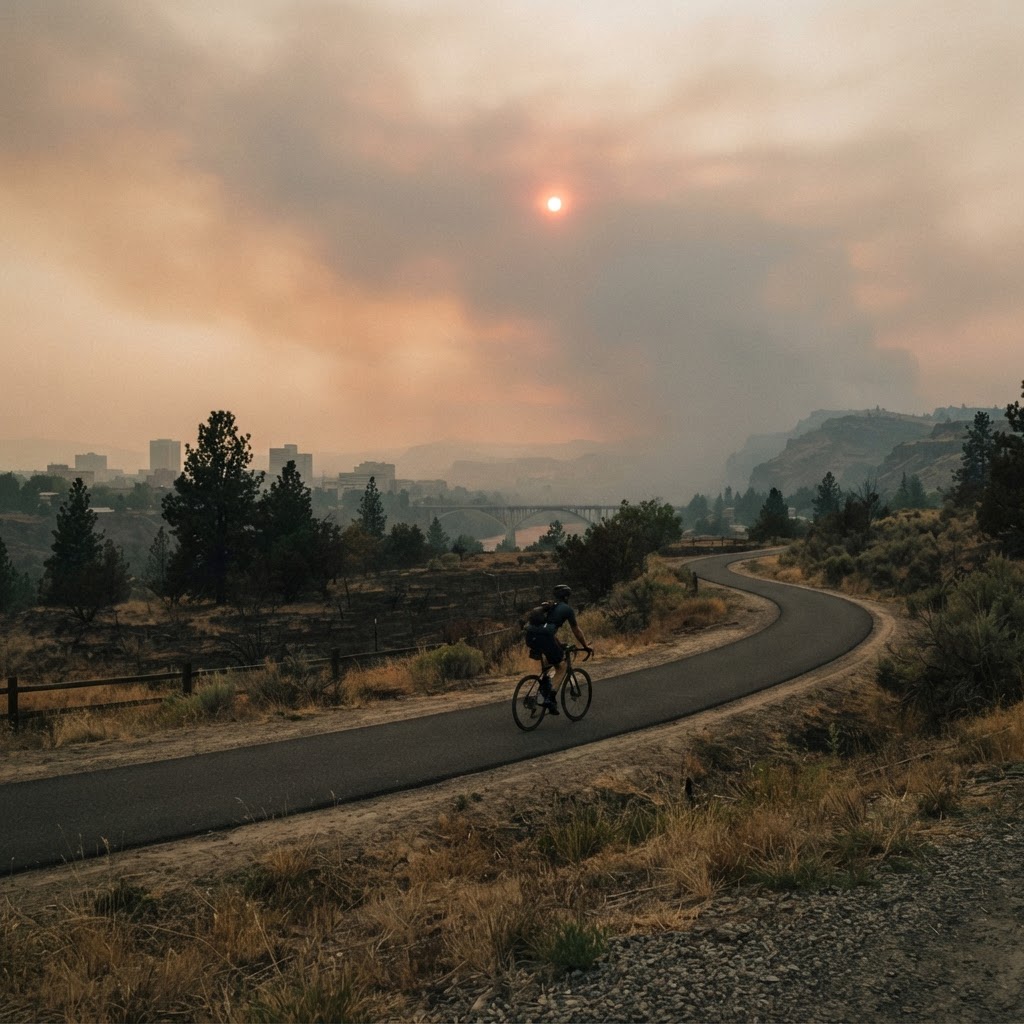
Summer is prime cycling season in Spokane — long days, dry trails, and perfect temperatures. But in recent years, wildfire smoke from regional fires has become a reality that cyclists need to navigate. Riding in smoky air can affect your health and performance, and knowing when to ride and when to stay indoors is part of being a responsible Spokane cyclist. Here's a guide to wildfire smoke and cycling safety.
Understanding Air Quality
Air quality is measured using the AQI (Air Quality Index), which runs from 0 (clean) to 500+ (hazardous). The key ranges for cyclists are: 0-50 (good — ride freely), 51-100 (moderate — generally fine for most riders), 101-150 (unhealthy for sensitive groups — consider reducing intensity), 151-200 (unhealthy — limit outdoor exercise), and 200+ (very unhealthy to hazardous — avoid outdoor riding).
How to Check Air Quality
Before riding, check current air quality. The EPA's AirNow website and app provide real-time AQI readings by location. The Washington State Department of Ecology also has an air quality monitoring network. For Spokane, search for the Spokane-area monitoring station for the most accurate local reading. If AQI is above 150, seriously consider rescheduling or riding indoors.
When Smoke Affects Cycling
Spokane typically experiences smoke impacts from July through September, when regional wildfires are most active. The smoke can arrive suddenly and linger for days or weeks. During severe smoke events, even healthy cyclists should avoid outdoor riding. The particles in wildfire smoke can penetrate deep into the lungs, causing irritation, reduced lung function, and longer-term health effects with repeated exposure.
Adapting Your Riding
When air quality is marginal (AQI 100-150), you can ride but should reduce intensity — the harder you breathe, the more smoke you inhale. Switch high-intensity rides to easier efforts. Early morning often has better air quality before the day's heat stirs up smoke. If smoke is persistent, consider indoor alternatives like a trainer, spin class, or strength training.
Protecting Your Health
If you must ride in smoky conditions, consider an N95 mask (though it can make breathing harder during exercise). Stay hydrated — smoke can dry out your airways. Listen to your body: if you feel chest tightness, coughing, or unusual fatigue, stop riding. People with asthma or other respiratory conditions should be especially cautious and consult their doctor about exercising in smoke.
Wildfire smoke is an unfortunate reality of summer cycling in the Inland Northwest. By monitoring air quality and making smart decisions, you can keep riding safely through most of the season — and know when to give your lungs a break.
Comments (0)
Log in to join the discussion
No comments yet. Be the first to share your thoughts!